

PaidHR now supports the new tax law changes effective 1 January 2026. 🚀

PaidHR now supports the new tax law changes effective 1 January 2026. 🚀

PaidHR now supports the new tax law changes effective 1 January 2026. 🚀

Measure performance Grow your People.

Align company and department objectives, track measurable key results, and run structured reviews so employers stay consistent and employees stay aligned.

Trusted by companies like yours

Why this exists

Most performance cycles fail for the same reason: they start late, feel unclear, and end in rushed reviews. We built PaidHR Performance Management to help teams manage performance across the whole cycle as a repeatable, measurable system—from company goals → department objectives → individual key results → reviews—so company performance improves over time.

Run performance cycles without the chaos.

Align your teams with clear goals, track measurable progress throughout the cycle, as well as carry out structured reviews consistently across managers, teams, and locations. Now with AI support to help teams define success faster and stay on track.

Less admin work

Fewer spreadsheets and follow-ups

Measurable performance

Goals tied to outcomes, not opinions

More consistency across managers

One process, less ambiguity

Faster setup with AI support

Get from “what should we measure?” to clear targets quicker

A clearer employee experience

Expectations are defined early

Better coaching conversations

Progress is visible before reviews

More continuous feedback

AI reminders help reduce feedback only at review time

Execute a full performance cycle without the spreadsheet jumble.

Goals, measurable progress, and structured reviews in one place with AI to help define what success looks like and keep cycles on track.

Align everyone to the same priorities.

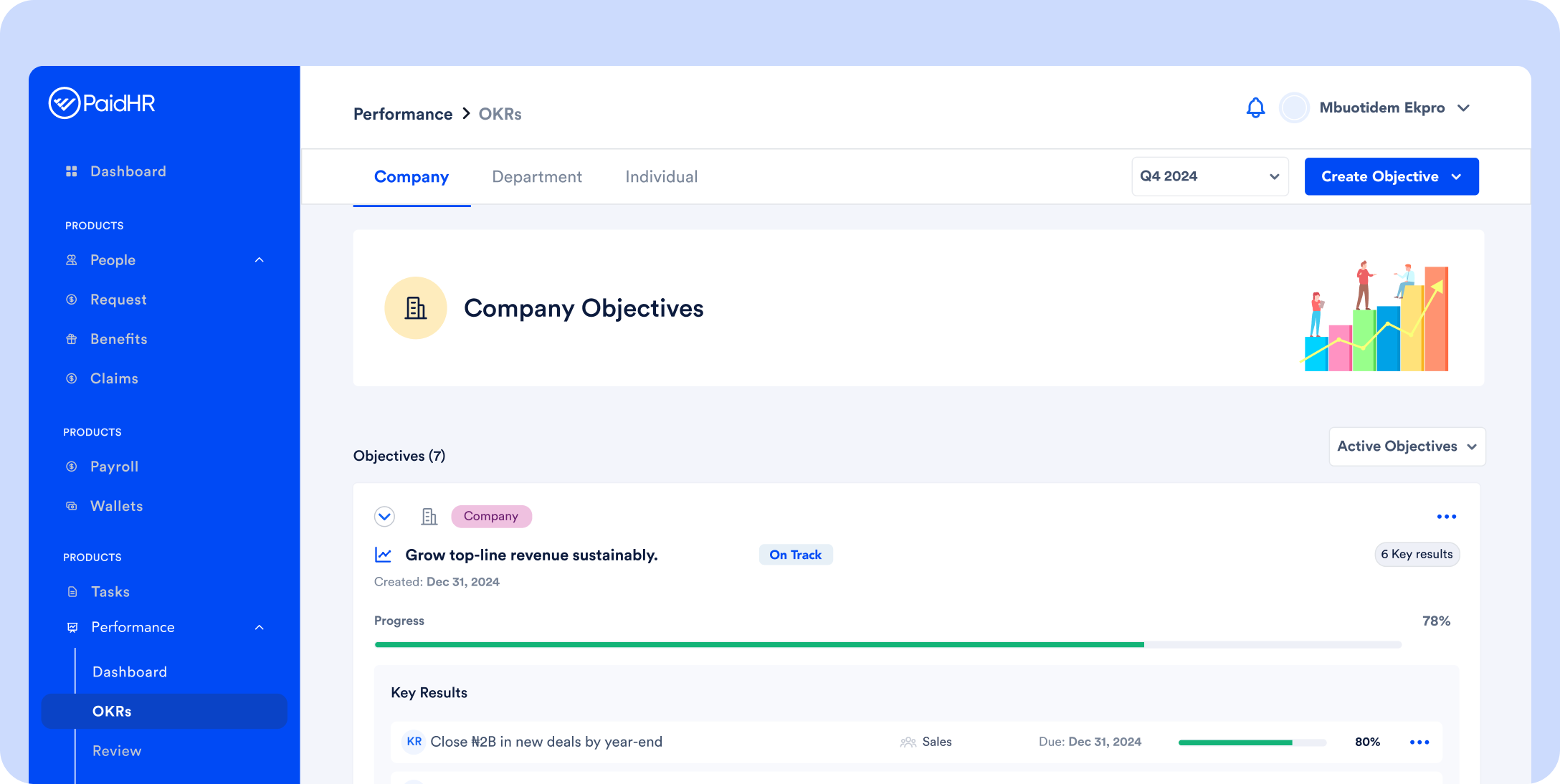
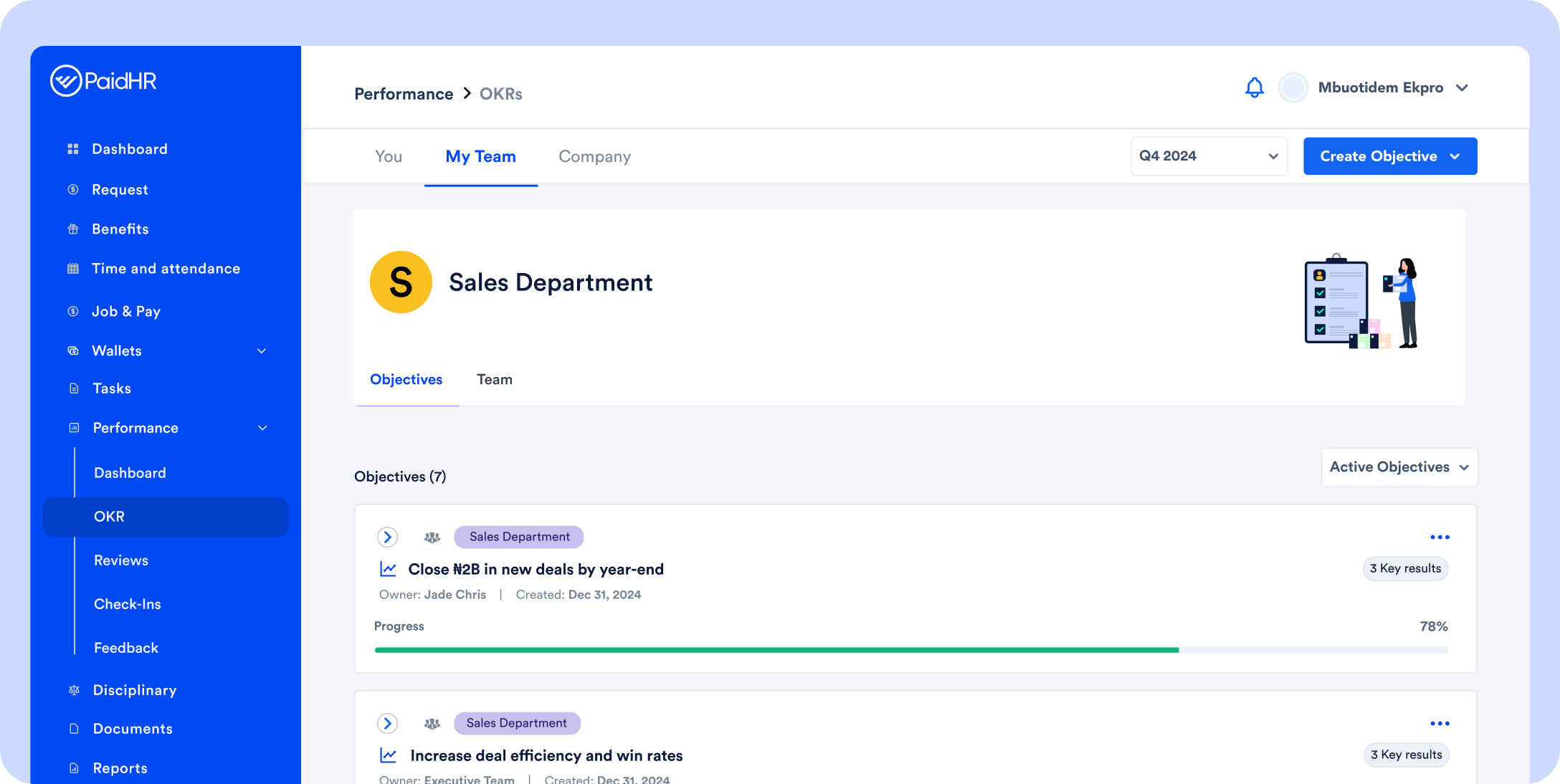
To ensure that expectations are clear from the start, start a performance period, select OKR and distribute goals from the business itself to departments. Our AI helps you draft clearer goals and define what success should look like before the cycle starts.

Create department objectives aligned to priorities

Set company objectives that cascade across the business

Choose OKR for your cycle

Make progress measurable.

Attach key results to objectives with clear owners, timelines, and metrics so you’re tracking outcomes all cycle long.

Keep progress visible before review season

Assign owners and due dates per key result

Track results using figures or percentages

Create uniform evaluations for each manager.

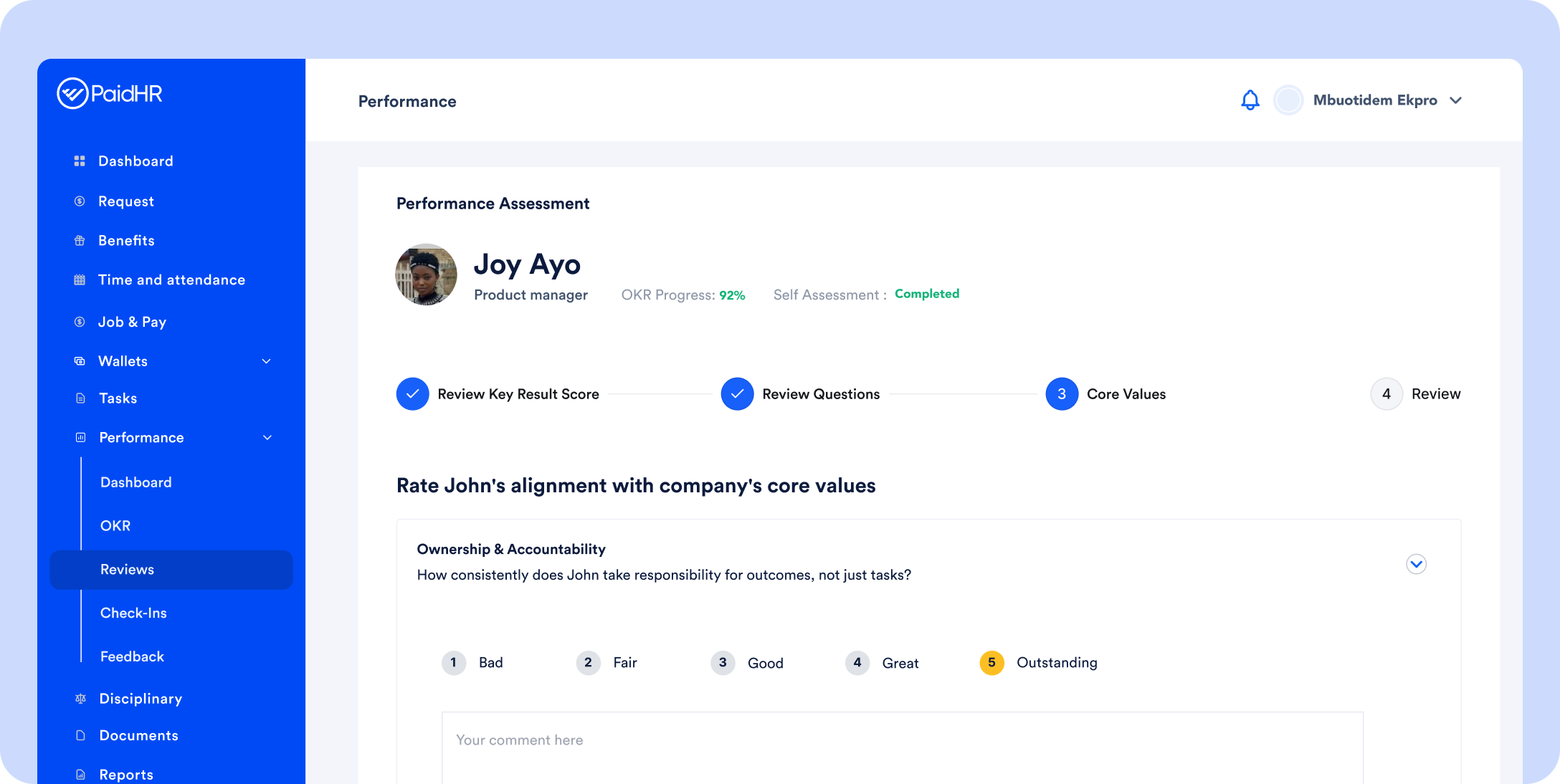
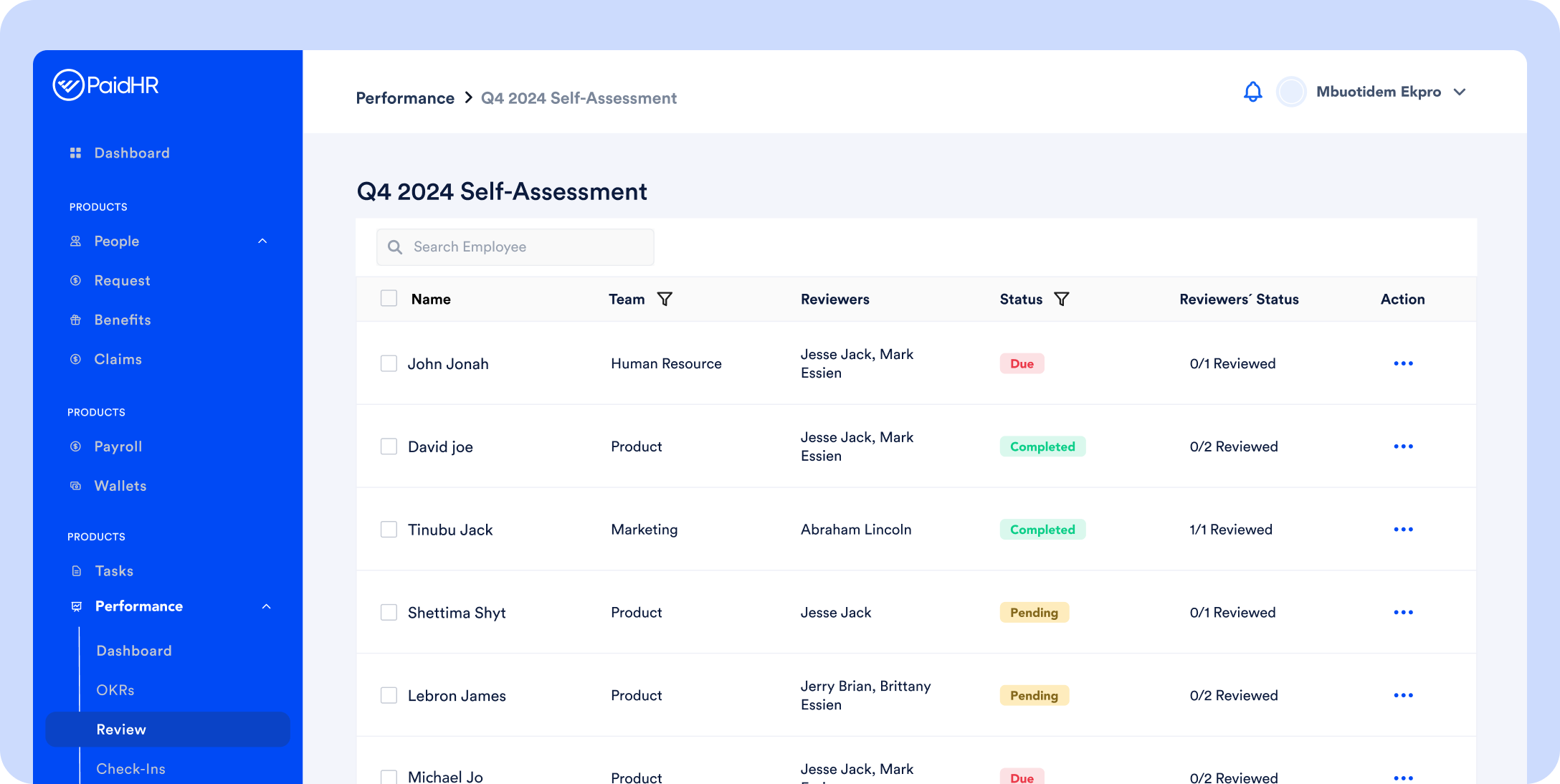
Build templates, define who reviews who, and choose response formats so reviews stay structured and comparable.

Use Rating Scale, Text, or Text + Rating

Create review templates

Set participants, titles, and review timelines

Evaluate behaviour alongside results.

When culture matters, include core values in reviews without adding complexity to the process.

Keep it optional for your cycle

Link values to review questions

Add core values with title + description

Track cross-functional work without forcing org charts.

For initiatives that span teams, create groups with shared goals so accountability stays clear.

Keep shared outcomes in one place

Ideal for launches, task forces, and key projects

Create groups across roles and managers

Coordinate performance cycles that your teams can reliably complete.

Frequently Asked
Questions

Create a Performance Period and choose OKR
Set Company Objectives for the cycle
Create Department Objectives aligned to company priorities
Add Key Results (KPIs) with metrics, owners, and timelines
Run Reviews using templates + response formats

PaidHR Performance Management is built for organisations running performance cycles and for employees participating in those cycles. Employers use it to set goals, track measurable progress, and run structured reviews. Employees use it to understand expectations, track their key results, and go into reviews with clearer criteria. Our AI support helps both sides stay aligned and consistent throughout the cycle. (coming soon..)

No. PaidHR supports performance cycles using OKRs or Balanced Scorecard, depending on how your organisation prefers to plan and measure outcomes.

Yes. Employers can create performance periods that match your organisation's cadence (quarterly, half-year, annual, or custom). Employees will see goals and key results within the active cycle.

Yes. In using PaidHR's Performance module, employees can add key results where enabled so progress can be tracked throughout the cycle, not only at review time.

PaidHR reviews can include rating scales, written feedback, or both, depending on how your employer sets up the review template.

Yes. Employers can create review templates using their own questions and choose response formats (rating, text, or both). Employees then complete reviews using the same structure, which helps consistency across teams.

No. Core Values are optional. Employers can include them when they want to assess behaviours alongside results. If Core Values are enabled, employees will see them as part of the review criteria.

PaidHR includes Performance Groups for initiatives that span teams. Employers can group employees across roles and managers to track shared outcomes. Employees in a group can see the shared objective structure for that initiative.

PaidHR's AI supports the entire cycle. For employees, it sends helpful prompts and creative reminders to stay on track with goals and key results, so review time is not a rush to remember everything. For employers and managers, it speeds up cycle setup, helps define clearer goals and success measures, and keeps reviews and feedback moving with reminders, reducing the need to chase updates.

Consistency. Using the performance management module, employers standardise review templates and formats, and progress is tied to measurable key results so review discussions are less about memory and more about outcomes tracked during the cycle.

Build a performance culture people trust.

Run clear cycles, track measurable progress, and make reviews easier for everyone with PaidHR.