Finding the best HR software for small businesses is harder than it looks. Most comparison guides point you to the same global tools, but if your team is in Lagos, Nairobi, Accra, or Johannesburg, those tools were not built for you.
Micro, small and medium enterprises account for about 70% of total employment worldwide, and a large share operate in informal economies, so many teams are actively trying to professionalise how they manage people.
A growing headcount, payroll getting harder to manage, onboarding that lives in someone’s inbox, and compliance requirements that change without warning; these are the real problems you are trying to solve.
You need a system that works for your team size, your budget, and where you operate.
This guide gives founders, HR managers, and operations leads a clear, practical breakdown of what HR software does, what to look for, and how to choose the right one for a growing team.
What HR Software Does for Small Businesses
At its core, HR software replaces scattered spreadsheets, paper files, and inbox-driven processes with one place to manage your people.
It is also commonly called an HRIS (Human Resources Information System), HRMS (Human Resources Management System), or HCM (Human Capital Management) platform. In everyday use, these terms mean roughly the same thing.
For small businesses, “no system” is often the default. Most teams start by managing employee data in spreadsheets, tracking leave in shared calendars, and running payroll manually. This works until it does not.
Here is what HR software for small businesses actually fixes:
Employee records that do not fall apart
When employee data is scattered across multiple spreadsheets, shared drives, and email threads, getting accurate answers fast becomes difficult. Information gets lost.
Records become inconsistent, and when an audit happens, or an employee dispute arises, finding the right document takes far longer than it should.
A good HR system gives you one accurate record per person, with role-based access so the right people see the right information.
Payroll and compliance support
Payroll is not just about paying people. Employers need to issue compliant payslips, track deductions, meet remittance deadlines, and keep records for defined periods.
In Nigeria, PAYE rules place the responsibility on the employer to deduct and remit on behalf of every employee. Pension contributions are mandatory.
In Kenya, NSSF contribution limits and remittance schedules are updated regularly, and missing a deadline incurs penalties.
In South Africa, every payslip must include a specific set of details as required by the Department of Employment and Labour.
The best HR tools for small businesses should help you stay on top of these requirements automatically, not add another manual process to your plate.
Recruitment and onboarding that scales
When onboarding is manual, every new hire is a risk. Missing documents, incomplete tasks, inconsistent experiences. As your team grows, this becomes stressful and harder to manage.
Good HR software gives every hire the same structured start: the right documents, the right tasks, and a clear process from day one.
4 Key Features to Look for in HR Software for Small Businesses
Most HR tools look similar on a features page. Here is what actually matters when searching for the best HR tools for small businesses
1. Payroll automation and statutory compliance
Even if payroll is handled by finance or an external provider, your HR software should reduce manual steps and protect you from errors.
For teams in Africa, this means the software needs to understand local rules, not just process numbers.
Nigeria’s PAYE structure, Kenya’s NSSF and Housing Levy, South Africa’s statutory deduction requirements, and pension rules across markets all have different calculations, deadlines, and formats.
A tool that does not understand these natively will create more work, not less.
2. Employee self-service
Self-service is not a feature; it is how you stop HR from becoming a bottleneck.
When employees can check their leave balance, download a payslip, update their contact details, or submit a request without messaging someone on Slack or WhatsApp, your HR team gets hours back every week.
For small businesses with lean HR functions, this is one of the highest-impact features you can invest in.
3. Performance and development tracking
Performance management does not need to be complicated. For most small businesses, what matters is the ability to set goals, log check-ins, and store decisions consistently so that reviews feel fair and records exist if things go wrong.
Look for software that makes this easy for managers, not just HR.
4. Compliance controls and data privacy
Small businesses hold sensitive information such as payroll records, health notes, disciplinary history, and leave records.
You need to know that data is stored securely, that access is controlled by role, and that records can be retained for the right amount of time and then deleted.
If you outsource any HR or payroll processing, remember that you remain responsible for how that data is handled. Vendor contracts and security practices matter.
Best 6 HR Software for Small Businesses That Actually Work
There is no single best tool for every small business. The right choice depends on your size, your budget, and where you operate. Here is how the major options compare.
| Software | Best For | Regional Focus | Starting Price |
| PaidHR | African teams needing local compliance and payroll | Nigeria, Kenya, Ghana, and 49 currencies | Contact for quote |
| BambooHR | SMBs focused on culture and core HR records | US and Global (Payroll limited to US) | ~$250/mo or $10.25/employee |
| Rippling | Scaling startups needing unified HR and IT | Global (Strong EOR and device management) | $8/employee + $40 base fee |
| Gusto | US-based startups running payroll for the first time | United States only | $49/mo base + $6/employee |
| Zoho People | Budget-conscious teams wanting modular flexibility | Global (Integrates with Zoho ecosystem) | $1.25 to $1.50/employee |
| Deel | Hiring international contractors and remote teams | 150+ countries | $49/contractor; $599/employee for EOR |
1. PaidHR
Best for: African businesses that need payroll, compliance, and HR in one place.
PaidHR is an all-in-one people platform built specifically for African teams. It covers payroll, statutory compliance, onboarding, performance management, and employee management from one platform.
Unlike global tools that require workarounds to handle Nigerian PAYE, pension remittances, or Kenyan statutory deductions, PaidHR is built around these requirements from the ground up.
For small businesses in Africa that are moving from manual processes into a more formal, scalable setup, this is the combination that matters most.
You get local compliance handled correctly, without the need to patch together multiple tools or manually update tax calculations every time regulations change.
2. BambooHR
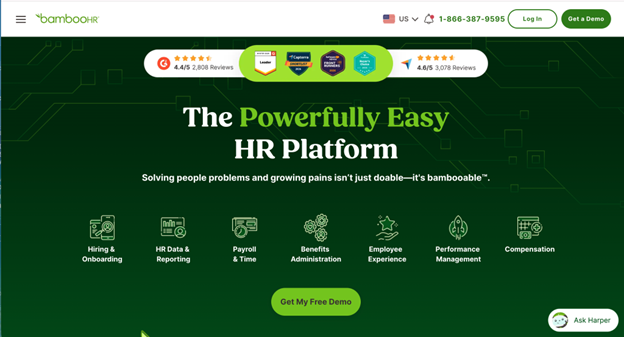
Best for: Small and mid-sized businesses in the US or globally.
BambooHR is one of the most popular HRIS platforms for SMBs. It has a clean interface, strong employee self-service, time-off tracking, and performance management tools. Payroll is an add-on rather than built-in.
It is well-suited for teams that want a polished HR system and operate primarily in markets where its payroll integrations work. For African businesses, local statutory compliance is limited.
3. Rippling
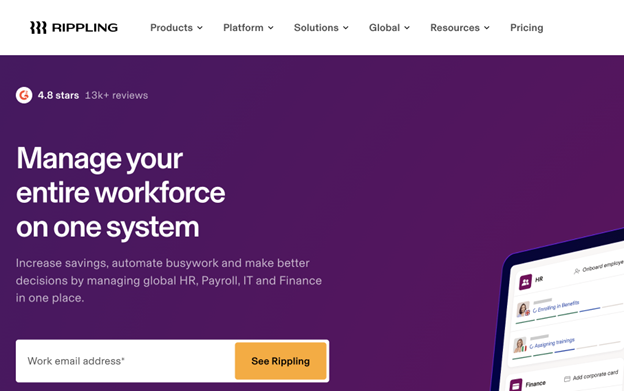
Best for: Fast-scaling teams that want to connect HR and IT in one place.
Rippling consistently rates among the top platforms on review sites like G2, scoring 4.8 out of 5. It stands out for combining HR, payroll, and IT management, which is useful when your team is growing quickly across multiple functions.
Pricing can rise with add-ons and it is primarily designed for US and global markets, not African compliance environments.
4. Gusto
Best for: US-based small businesses running payroll for the first time.
Gusto is widely recommended for small businesses in the United States because it simplifies payroll, tax filing, and benefits in one place. It starts at around $40 per month plus a per-employee fee.
It is not built for African markets and does not handle local statutory requirements across Nigeria, Kenya, or South Africa.
5. Zoho People
Best for: Budget-conscious teams looking for a modular HR system.
Zoho People offers affordable, flexible pricing and a range of HR features including leave management, attendance, and performance tracking. It has a free plan for up to five users.
Payroll coverage in African markets is limited and you may need additional tools to handle local compliance.
6. Deel
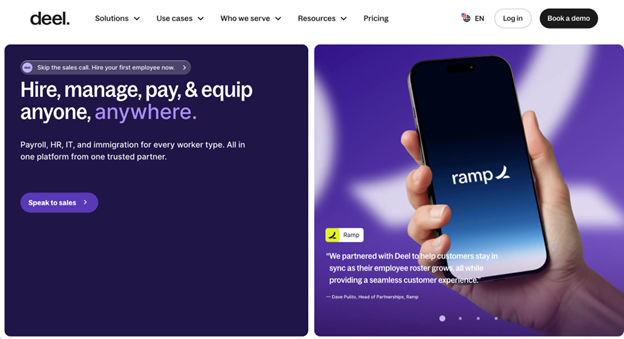
Best for: Companies hiring internationally across multiple countries.
Deel is built around global and remote hiring, including employer-of-record services. It is strong if your challenge is bringing on contractors or employees in new countries quickly.
For teams running local payroll operations across African markets, it may be more infrastructure than you need.
How to Choose the Right HR Software
Here is a straightforward framework for making the right call.
Step 1: Start with your biggest pain
If payroll errors are your main problem, prioritise payroll automation, statutory deduction accuracy, and payslip generation. If onboarding is the issue, focus on document workflows and task automation.
If managers are inconsistent, look at goal-setting and check-in tools. Starting with your actual pain point prevents you from buying a feature-heavy platform you will not use.
Step 2: Match the tool to where you operate
If you operate in one country with straightforward payroll, you can start with an HRIS that covers records, leave, and onboarding and connect a payroll tool separately.
If you operate across multiple African markets, you need a platform that handles multi-country payroll rules, strong permission controls, and clear data handling built in.
Do not assume a globally popular tool will handle local compliance requirements. Most do not.
Step 3: Think about the total cost, not just the monthly fee
The full cost of HR software includes implementation time, data migration, and manager training, not just the subscription.
For most small businesses, a phased rollout that launches the most critical workflows first is faster and less risky than trying to go live on everything at once.
Step 4: Check integration needs
If finance owns payroll, your HR system needs to connect to finance tools or produce clean payroll outputs.
Think about whether you want an all-in-one HRIS or separate tools for HR and payroll, and what the maintenance overhead of each looks like.
Step 5: Ask direct questions about data security
Ask vendors how they handle access control, audit trails, and data retention.
You should be able to restrict access by role, apply retention rules, and feel confident that sensitive employee data is stored securely. If a vendor cannot answer these questions clearly, move on.
When Should a Small Business Invest in HR Software?
There is no magic employee number. There are signals.
1. Admin is slowing down leadership
If HR, operations, or founders are spending significant time every week answering routine questions or tracking down documents, that time has a cost. A system pays for itself quickly in those situations.
2. Growth is making your processes fragile
If onboarding feels stressful, if information is getting lost, if new hires are having inconsistent experiences, a system will reduce errors and create a better start for every person you hire.
3. Compliance risk is becoming real
Expanding into new markets, formalising employment relationships, or growing past the point where payroll can be run manually all increase the risk of getting compliance wrong. The cost of errors, financial and reputational, goes up as you grow.
4. Employee data is becoming a liability
The moment you hold sensitive personal information at scale, you need lawful storage, controlled access, and clear retention policies from the best hr software for small businesses. This is not something to defer.
Frequently Asked Questions
What is the difference between HRIS, HRMS, and HCM?
In everyday use, these terms are largely interchangeable. An HRIS (Human Resources Information System) is a system of record for employee data.
HRMS (Human Resources Management System) typically adds workflow and process management features. HCM (Human Capital Management) usually refers to broader platforms that include talent management and workforce planning.
Most vendors use these terms differently, so focus on features rather than labels.
Do small businesses really need HR software?
Many start without it, but the problems compound fast. Without a system, employee data sits in spreadsheets, onboarding is inconsistent, there is no self-service for employees, and scaling recruitment becomes difficult.
The cost of having no system is often invisible until something breaks.
What HR features should I prioritise first?
Start with employee records, payroll inputs and reporting, onboarding workflows, and access permissions. These are the processes that break first as you grow.
An all-in-one HRIS that covers these in one platform reduces the complexity and cost of maintaining multiple disconnected tools.
What makes choosing HR software harder in African markets?
Statutory requirements vary significantly across countries and change regularly. PAYE structures, pension contribution rules, payslip content requirements, and remittance deadlines are different in Nigeria, Kenya, South Africa, Ghana, and other markets.
Most global HR tools are built around US or European compliance and do not handle African market requirements natively, which means you end up doing manual compliance work on top of running the software.
How long does HR software implementation take?
For most small businesses, a focused rollout of core workflows takes between four and eight weeks. More complex implementations with multiple countries or heavy customisation can take longer.
For PaidHR, software implementation takes two to three weeks at most. For small businesses, a phased approach, starting with your most painful workflows, is usually faster and lower risk than a full launch.
Is HR software worth it for a team of 10 to 20 people?
Yes, often earlier than teams expect. Once you have more than 10 employees, payroll complexity increases, onboarding needs to be consistent, and employee data requires proper management.
The time you spend on manual HR admin at that stage is time not spent on the business.
Conclusion
The right HR software does not just save admin time. It reduces payroll errors, makes onboarding consistent, keeps you compliant as regulations change, and gives your team a better experience from day one.
For teams building in Africa, the gap in most global tools is local compliance. Nigerian PAYE, Kenyan statutory deductions, South African payslip requirements, and pension remittance rules across markets require a platform that understands the local context, not one that requires you to build workarounds.
PaidHR is built for exactly this. It is an all-in-one people platform for African teams covering payroll, compliance, onboarding, and employee management in one place, designed to work the way African businesses actually operate.
If you are ready to move from spreadsheets to a system that scales with you, explore PaidHR and see how it fits your team.