
Most Nigerian businesses today know they need HR software; the real challenge is understanding the types of HR software that actually make sense for their operations.
A quick search online often leads to technical jargon, long lists of software categories, and explanations that don’t reflect the day-to-day realities of running a business.
You may simply be looking for a way to pay your staff accurately or manage leave properly, but instead you find yourself buried under a mountain of confusing terms like HRIS, HCM, and HRMS, minor technical distinctions that add little value to your daily work.
The simpler way to understand the different types of HR software applications is to stop thinking in categories and start thinking in terms of people.
Every employee follows a predictable journey through your company, from hiring to management, development, and eventually exit. The various types of HR software are not separate, disconnected tools; they are practical solutions designed to support specific challenges at each stage of that journey.
This guide strips out the complexity and reframes HR software around the employee lifecycle.
From hiring to managing, growing, and offboarding your team, you’ll see exactly which tools support each stage and how they fit together into a clear, modern HR system.
Let’s explain the employee lifecycle first.
The Four Stages of Every Employee
Every employee goes through four key stages:
- Hire
- Manage
- Engage and grow
- Retain and offboard
Each stage has specific jobs to be done and different HR software applications that support those jobs. Let’s walk through each one.
Stage 1: HIRE (Find great talent and onboard them smoothly)
The task:
The first step in the journey is successfully finding and seamlessly integrating the best talent into your team. This phase is managed by two primary software types.
Applicant Tracking System (ATS)
Think back to the last time you posted a job.
Did your inbox immediately flood with hundreds of emails? Did you spend days printing CVs, highlighting keywords, and trying to keep track of who you called using complex, error-prone spreadsheets?
That chaotic process is exactly what modern HR software eliminates.
The Applicant Tracking System (ATS) is the tool that handles everything before the employee is officially hired. Its job is to manage job postings, collect and screen applications, communicate professionally with candidates, and schedule interviews.
This is essential for stopping the reliance on email and spreadsheets for hiring, allowing you to organise candidates and efficiently filter through hundreds of CVs.
Onboarding Software
You’ve finally hired someone after weeks of interviews.
Their first day arrives, and onboarding quickly turns into chasing documents, forwarding policy files, and answering the same setup questions repeatedly.
In many Nigerian businesses, this process still plays out across WhatsApp messages, shared folders, and verbal instructions. By the end of the first week, important steps have been missed, and no one is quite sure what’s been completed or what the new hire is still figuring out on their own.
But with an onboarding software, once the talent is secured, it has the role of collecting all necessary documents (IDs, bank details), distributing the employee handbook, managing contract signing, and assigning mandatory first-day tasks if any.
This significantly reduces HR paperwork and ensures 100% compliance from day one, speeding up the process of getting a new hire productive.
Stage 2: MANAGE (Core HR data, payroll and compliance)
The task:
Store employee records, pay employees accurately, comply with Nigerian regulations, and manage day-to-day admin.
This is the absolute core of your business. If you don’t pay your employees correctly and stay compliant with Nigerian law, everything else falls apart.
HR Management Software
The core of this stage is the HR Management software. It serves as the central, secure database for your entire workforce, acting as a single source of truth for employee records, job history, compensation details, documents, and organisational structure.
Instead of relying on scattered Excel sheets or physical files, this type of HR software applications ensures that every HR process works with accurate, up-to-date information.
Built on that foundation is;
Payroll Management software
This is the most critical application for most Nigerian businesses. Payroll goes far beyond calculating salaries.
It must accurately compute gross pay, apply complex deductions, process net salaries, and generate payslips while automatically handling statutory requirements such as PAYE, pension contributions, NHF, NSITF, rent relief, and other statutory deductions.
When payroll is managed through a compliant system, businesses reduce the risk of costly errors, penalties, and the month-end chaos that often comes with manual reconciliation.
Leave Management software
This type of HR software completes this stage by bringing structure to time-off administration.
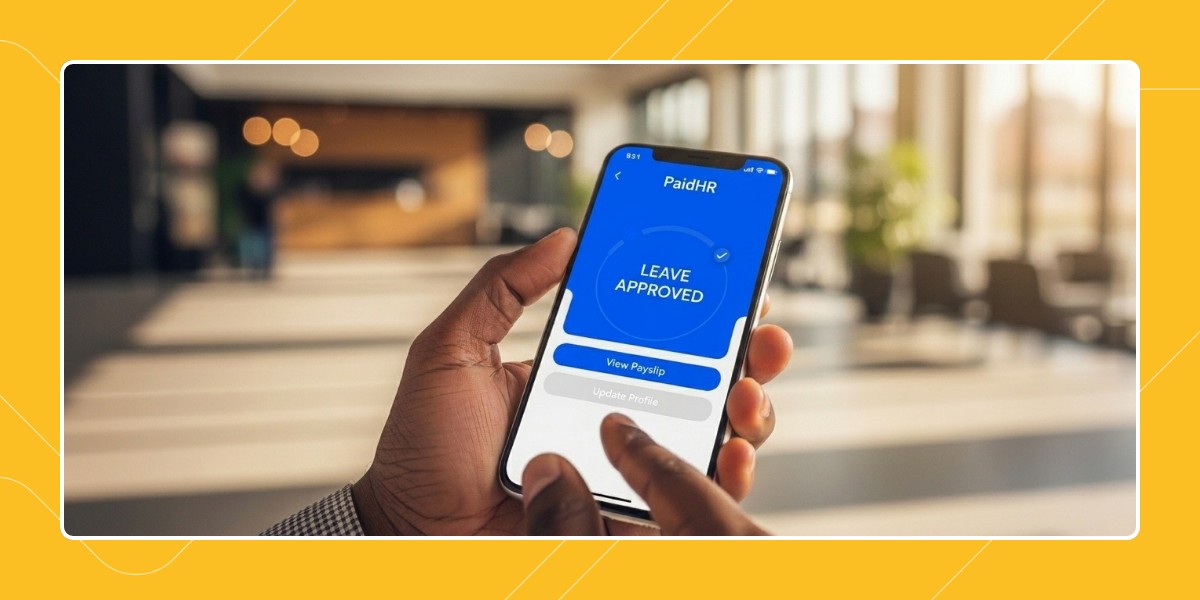
It allows employees to request annual, sick, or maternity leave through a clear process, enables managers to approve requests easily, and maintains real-time visibility into leave balances.
This prevents scheduling conflicts, ensures policies are applied consistently, and gives the business a clear view of its overall leave liability without relying on WhatsApp messages or forgotten approvals.
Stage 3: Engage and Grow (Performance and skill development)
The task:
Once an employee is hired and paid, the focus shifts to maximising their potential and retention. The different types of HR software applications under this stage are essential for building a high-performing culture.
Performance management software
It helps take performance conversations out of the once-a-year appraisal and turn them into something more useful and ongoing.
Instead of vague feedback and last-minute reviews, it gives managers and employees a clear way to set goals, track progress, check in regularly, and talk honestly about what’s working and what isn’t.
Everyone knows what’s expected, how performance is being measured, and where improvement is needed.
Learning Management System (LMS)
This makes it easier for employees to actually grow. It’s where training lives, from onboarding courses to role-specific skills and required compliance learning. Managers can see who’s learning what, and employees can build new skills without the guesswork.
For fast-growing Nigerian businesses, this kind of structure matters, especially when teams are taking on new responsibilities or moving into new markets.
Stage 4: Retain and Offboard (Insights, Analytics and Exit management)
The task:
The final stage involves using data to make strategic decisions and ensuring that the employee’s final experience with your company is positive.
HR Analytics Software
This is where all your people data finally starts to make sense. By pulling information from across your HR systems, it turns everyday activity into clear insights you can actually use.
Instead of guessing, you can see patterns in turnover, spot performance gaps, understand how productive each department really is, and even forecast what headcount will cost in the coming months.
These insights help leaders make better, more confident decisions about their people.
Offboarding Software
When it’s time for an employee to leave, this type of HR software ensures the process is handled just as thoughtfully as hiring.
It manages resignation documentation, clearance workflows, asset recovery, system access removal, final pay calculations, and exit interviews in one structured flow.
This consistency reduces disputes, protects company assets and data, and leaves employees with a professional final impression, which matters more than many businesses realise.
Where PaidHR Fits In
Many Nigerian businesses struggle with having 4–6 separate tools for HR, each with its own login, pricing, and data duplication issues.
PaidHR solves this by connecting the entire lifecycle in one platform:
- Hiring and onboarding
- Core HR and employee records
- Nigerian payroll and compliance
- Leave management
- Analytics
- Offboarding
Instead of stitching tools together, you get a single, powerful system built for Nigerian realities.
When you organise them around the employee lifecycle, everything becomes clearer: hire the right people, manage them efficiently, engage and grow your team, and retain and offboard professionally.
Whether you’re a small business or a growing organisation, this framework simplifies your HR strategy and helps you pick tools that actually move your business forward.
Frequently Asked Questions About Types of HR Software
1. What are the main types of HR software?
The main types of HR software support different stages of the employee lifecycle. These include tools for hiring and onboarding, core HR and payroll management, performance and learning, and analytics and offboarding.
While these tools are often sold separately, many HR platforms combine multiple functions into one integrated system.
2. What is the difference between HRIS, HRMS, and HCM?
These acronyms often cause confusion, but in practice, the differences are minimal.
- HRIS (Human Resource Information System) typically refers to software focused on employee records and administrative HR tasks.
- HRMS (Human Resource Management System) usually includes HRIS features plus payroll and performance management.
- HCM (Human Capital Management) is a broader term that emphasises talent development, performance, and workforce planning.
Today, many platforms offer all these capabilities regardless of the acronym they use, so it’s more important to focus on what the software actually does than the label attached to it.
3. Is payroll software different from HR software?
Payroll software can be a standalone tool, but it’s often part of a broader HR system.
When payroll is integrated with core HR, leave management, and benefits, it reduces errors, prevents duplicate data entry, and ensures compliance, especially in countries like Nigeria with specific statutory requirements.
4. What types of HR software applications do Nigerian businesses need most?
For Nigerian businesses, the most critical HR software applications are core HR, payroll with local compliance, leave management, and basic performance tracking.
As a company grows, learning management, analytics, and offboarding tools become increasingly important for scalability and risk reduction.
5. Can small businesses use HR software, or is it only for large companies?
HR software is not just for large organisations. Small and growing businesses often benefit the most because structured systems reduce manual work, prevent compliance mistakes, and create consistency as teams expand.
6. Should I choose separate HR tools or an all-in-one platform?
Separate tools can work at the early stages, but they often lead to duplicated data, disconnected workflows, and higher long-term costs.
An integrated platform such as PaidHR that covers multiple stages of the employee lifecycle usually offers better visibility, efficiency, and scalability.
7. How do I choose the right HR software for my business?
Start by identifying where your biggest HR challenges are: hiring, payroll accuracy, compliance, performance management, or reporting.
Then look for software that supports those needs today while still being flexible enough to grow with your business.